
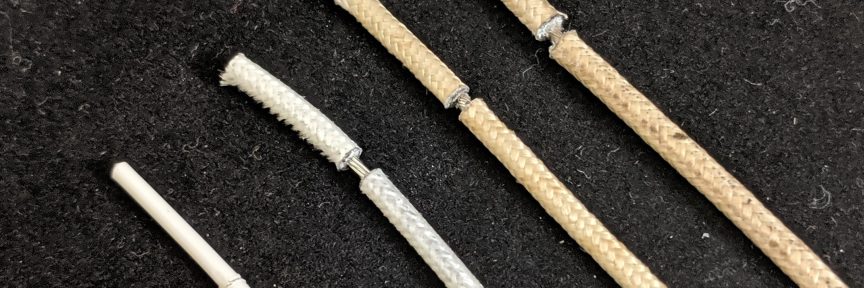

We're experiencing significant challenges with traditional wire stripping methods in our manufacturing process. How can laser wire stripping technology address these limitations compared to mechanical and thermal approaches?
Laser wire stripping provides comprehensive solutions where traditional methods fall short. Specifically, it overcomes four critical challenges: conductor damage prevention, complex structure handling, thick insulation processing, and operational efficiency limitations. Let me explain how laser technology transforms each of these areas.

Our biggest issue is damaging delicate conductors during stripping, especially with fine wires and optical fibers. How does laser technology prevent this type of damage?
Eliminating Conductor Damage Through Non-Contact Processing
Traditional mechanical methods often scratch or break internal conductors, particularly with diameters below 0.5 mm. Similarly, thermal stripping struggles with heat control, causing material melting or oxidation. Conversely, laser stripping employs non-contact processing that selectively removes insulation through thermal decomposition or molecular bond disruption. For instance, in consumer electronics, laser stripping of micro ribbon cables achieves sub-micron precision with yield rates exceeding 99%. Furthermore, optical fiber applications benefit from precise coating removal without damaging the glass core, thereby preserving optical transmission performance.
We frequently work with multi-layer cables and complex structures. How does laser stripping handle these challenging configurations compared to traditional methods?
Precision Handling of Multi-Layer and Complex Cable Structures
Traditional methods typically struggle with multi-layer insulation and irregular cross-sections, often resulting in uneven stripping or interlayer mixing. However, laser stripping machines select appropriate laser types based on material properties, enabling programmable multi-layer processing. For example, automotive wiring harness applications utilize lasers to sequentially strip outer PVC, copper foil shielding, and inner insulation with ±10 micron accuracy. Additionally, medical electronics benefit from single-pass multi-layer stripping for dual-core or coaxial cables in ECG leads, significantly streamlining production processes.
Thick and hard insulation materials like PTFE and silicone present major challenges in our aerospace applications. How does laser technology overcome these difficult materials?
Efficient Processing of Thick and Hard Insulation Materials
Mechanical stripping proves inefficient for thick insulation, with tools prone to dulling, while thermal methods risk material carbonization. In contrast, laser stripping machines equipped with high-power CO2 lasers (50–200 W) efficiently remove challenging materials via thermal decomposition or ablation. For instance, aerospace applications successfully strip 1–2 mm thick PTFE layers from MIL-SPEC cables without residue. Similarly, medical device manufacturing utilizes lasers for precise stripping of composite materials in catheter cables, increasing processing speeds by over 30% while maintaining material cleanliness.
What are the core technical advantages that make laser stripping so versatile across different materials and applications?
Core Technical Advantages and Laser Selection Flexibility
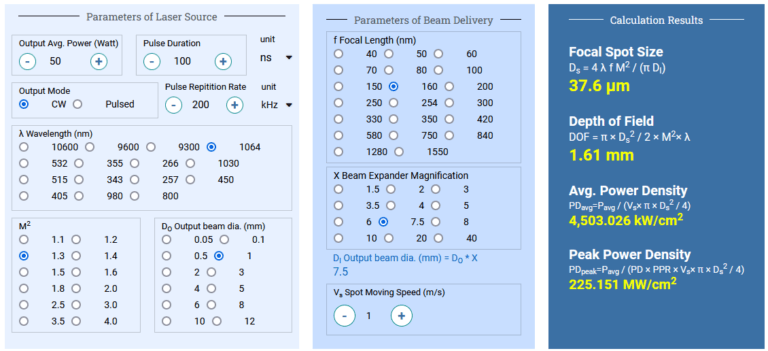
The fundamental advantage lies in selective laser-material interaction. Different laser types target specific material properties: CO2 lasers (10.6 microns) efficiently process non-metallic layers, while fiber lasers (1064 nm) excel at metallic shield cutting. Moreover, mid-infrared lasers (2–5 microns) combine precision and efficiency for optical fibers and composite coatings. Programmable control systems ensure precise management of position, depth, and dimensions, even for multiple wires simultaneously. Consequently, CO2 lasers achieve <5 micron accuracy on fluoropolymer coatings, while fiber lasers reach speeds up to 10 m/min on coaxial cable shields.
How does the optical path design and process flexibility impact operational efficiency in production environments?
Advanced Optical Design and Production Flexibility
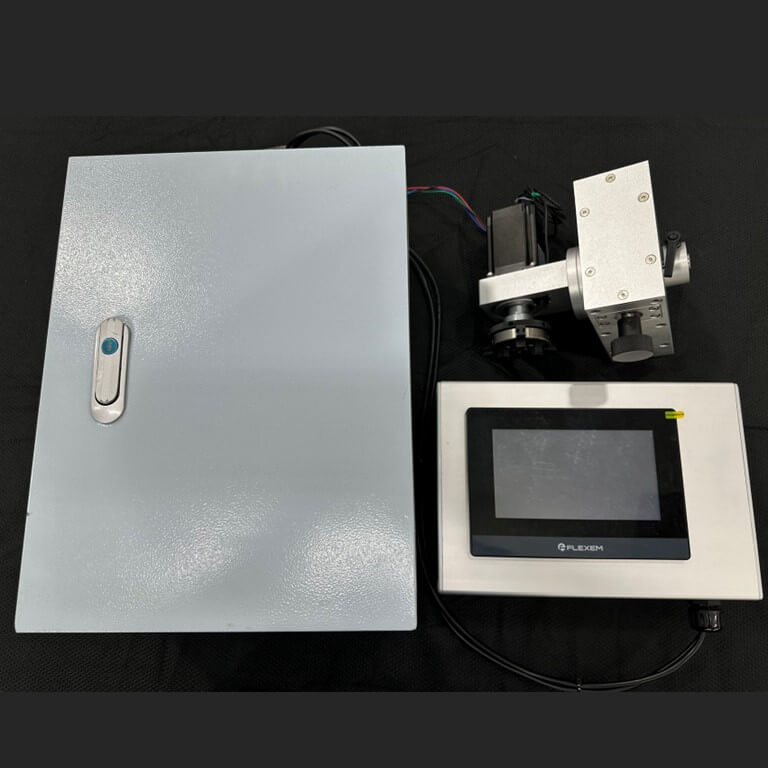
Laser stripping systems employ either moving cutting heads for linear applications or rotating 2D galvanometer scanners for complex patterns. Higher power systems (>50 W) can vaporize insulation directly, eliminating post-processing requirements. For example, galvanometer systems in medical aesthetics handle 60W CO2 lasers with ±10 micron accuracy, while industrial 100W fiber lasers with moving heads achieve 20 m/min speeds on automotive harnesses. Additionally, integrated automation through CCD vision positioning and PLC control enables unmanned batch production, reducing labor costs while maintaining consistent quality across diverse wire types.
Finally, how does laser stripping compare to traditional methods in terms of operational efficiency and workplace safety?
Enhanced Operational Efficiency and Safety Standards
Traditional mechanical stripping requires frequent blade replacements and lengthy adjustments, while thermal methods pose safety risks with slow processing speeds (<5 m/min). In comparison, laser stripping offers software-configurable parameters enabling rapid switching between wire types and processing speeds of 10–50 m/min. For instance, consumer electronics production achieves 50% efficiency improvements when switching between USB-C and HDMI cable coatings. Furthermore, integrated safety features including protective enclosures and fume extraction systems effectively mitigate risks from harmful gases and laser radiation, ensuring compliant workplace environments.